Chimney Repair guide • Quincy, MA
More chimney leaks start at the flashing than at every other part combined. It is also the part most often repaired wrong, because there are five distinct ways it fails.
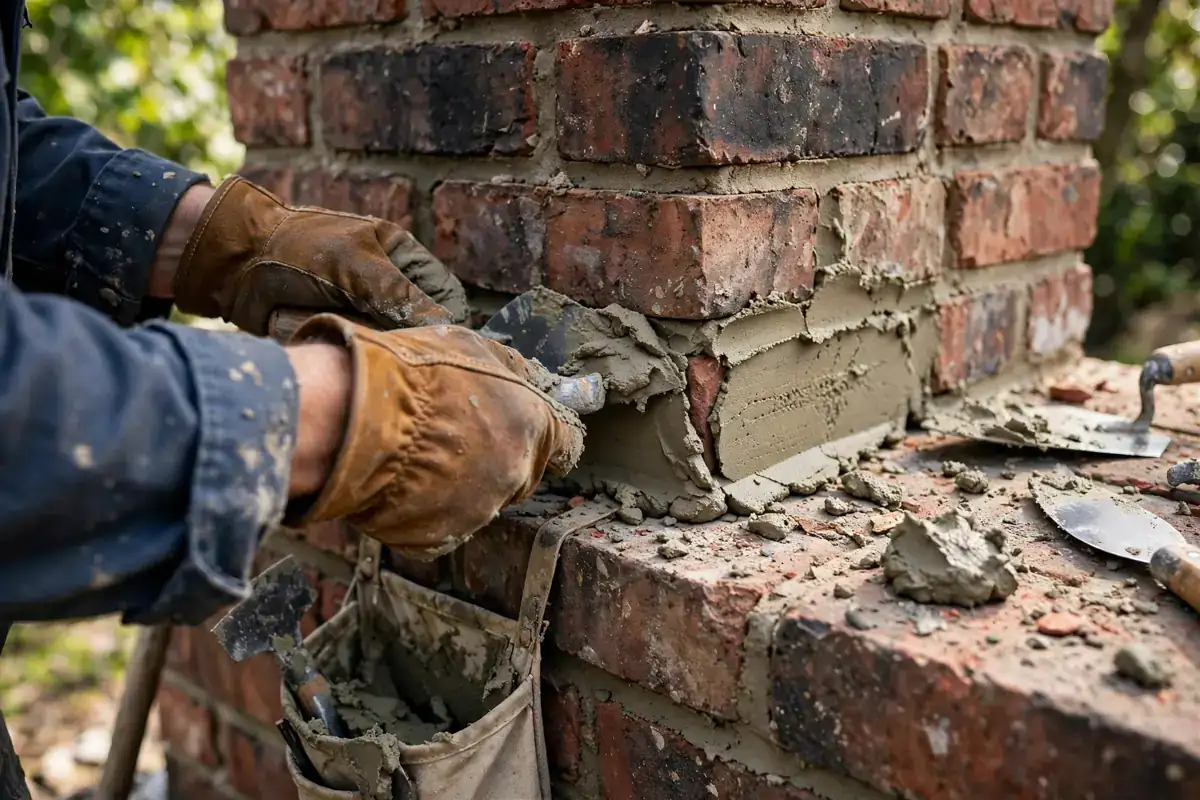
Flashing is the metal weatherproofing where the chimney meets the roof. Learn its five failure modes and you will know what you are looking at, and what a proper fix should include.
High wind and ice get under flashing edges and peel them up a fraction at a time. From the ground you will see a dark shadow line where the metal has separated from the brick or the roof. The fix is refastening and resealing, or replacement if the metal is tired.
Old galvanized flashing eventually rusts through, usually at the bends where water sits. Rust stains running down from the roofline are the giveaway. Patching rust buys a season; replacement buys decades.
The caulk or sealant where flashing meets brick dries out, cracks, and pulls away. This is the cheapest fix on the list and the most skipped, because the gap is small and easy to miss from the ground.
Counter-flashing should be embedded into a mortar joint. When it is just surface-mounted or the mortar around it has eroded, water runs behind it. The fix means cutting a proper reglet joint, not more caulk.
New flashing installed over old flashing traps water between the layers and hides the real condition underneath. If your chimney has visible flashing archaeology, assume the bottom layer has failed.
With binoculars, look at all four sides where the chimney meets the roof. Note lifted edges, rust streaks, or gaps at the brick line. Call (857) 403-9943 and describe which side and what you see; flashing repairs are straightforward once the failure mode is named.
This site is protected by reCAPTCHA and the Google Privacy Policy and Terms of Service apply.