Chimney Repair guide • Quincy, MA
When the flat face of a brick flakes or peels away, that is spalling: water got inside the brick, froze, and pushed the face off. It does not stop on its own.
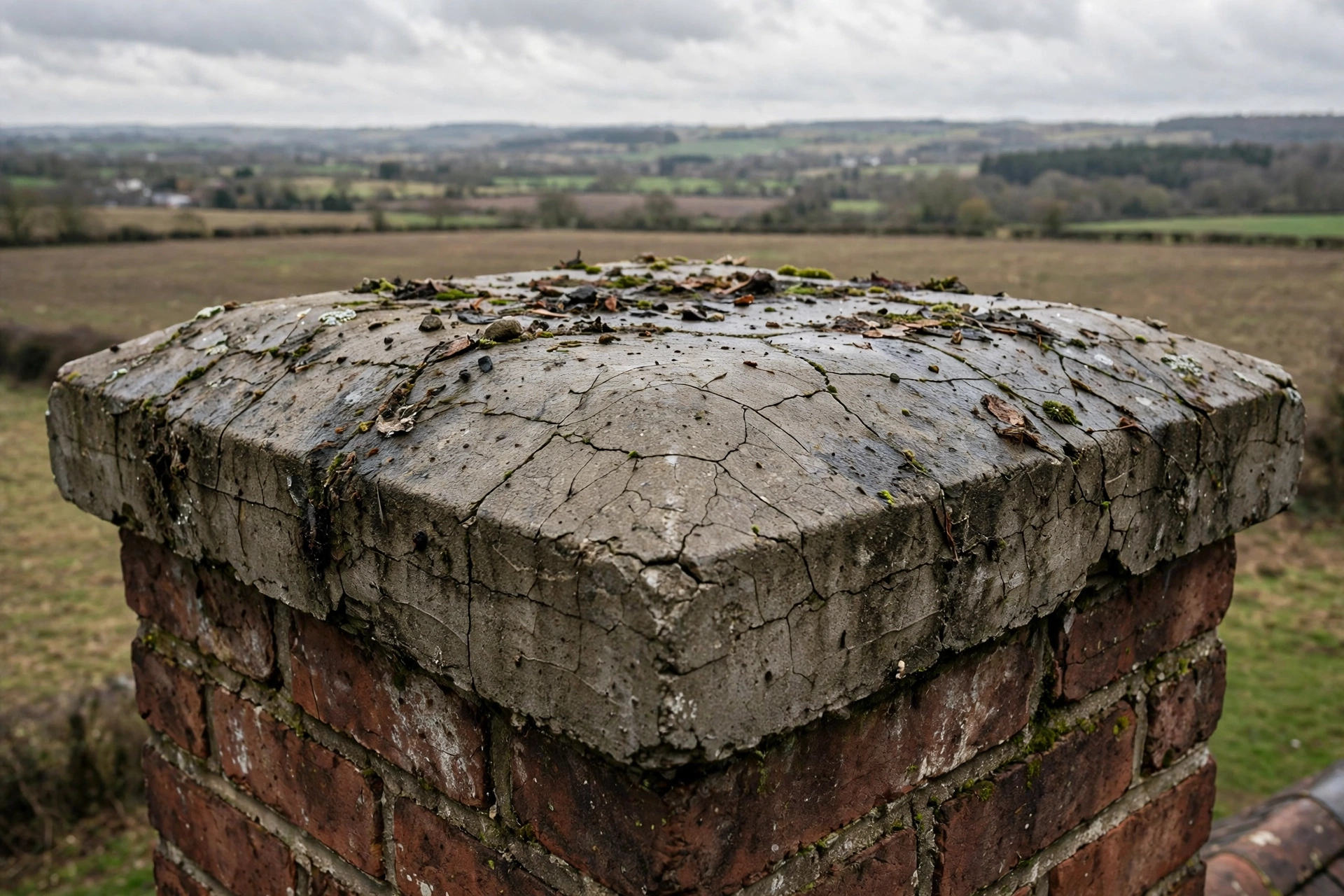
Spalling is the visible stage of a process that started seasons earlier. Understanding the stages tells you how urgent it is and what the repair looks like.
Small flakes come off the brick face, leaving a rough patch. The brick still has most of its section. At this stage the fix is stopping the water: crown, joints, waterproofing.
Chunks come off and the brick loses real thickness. Individual bricks can be cut out and replaced, but the water source has to be fixed first or the new bricks go the same way.
Whole bricks crumble and the stack loses section. At this point you are past spot repair and into partial rebuild territory, because new mortar cannot grip disintegrating brick.
Each spalled brick exposes more surface area to water, which freezes deeper the next winter. The process feeds itself, which is why a chimney that looked okay two years ago can look rough today.
Press your thumbnail into a brick face. Hard and unmarked means sound. If it dents or flakes, that brick is already compromised. Test several bricks on the weather side; damage is rarely even.
Do the thumbnail test on the weather side of the stack. If bricks are flaking, photograph the worst areas and call (857) 403-9943. Early spalling is a water problem with a masonry symptom; late spalling is a masonry problem, and the repairs are very different.
This site is protected by reCAPTCHA and the Google Privacy Policy and Terms of Service apply.