Chimney Repair guide • Quincy, MA
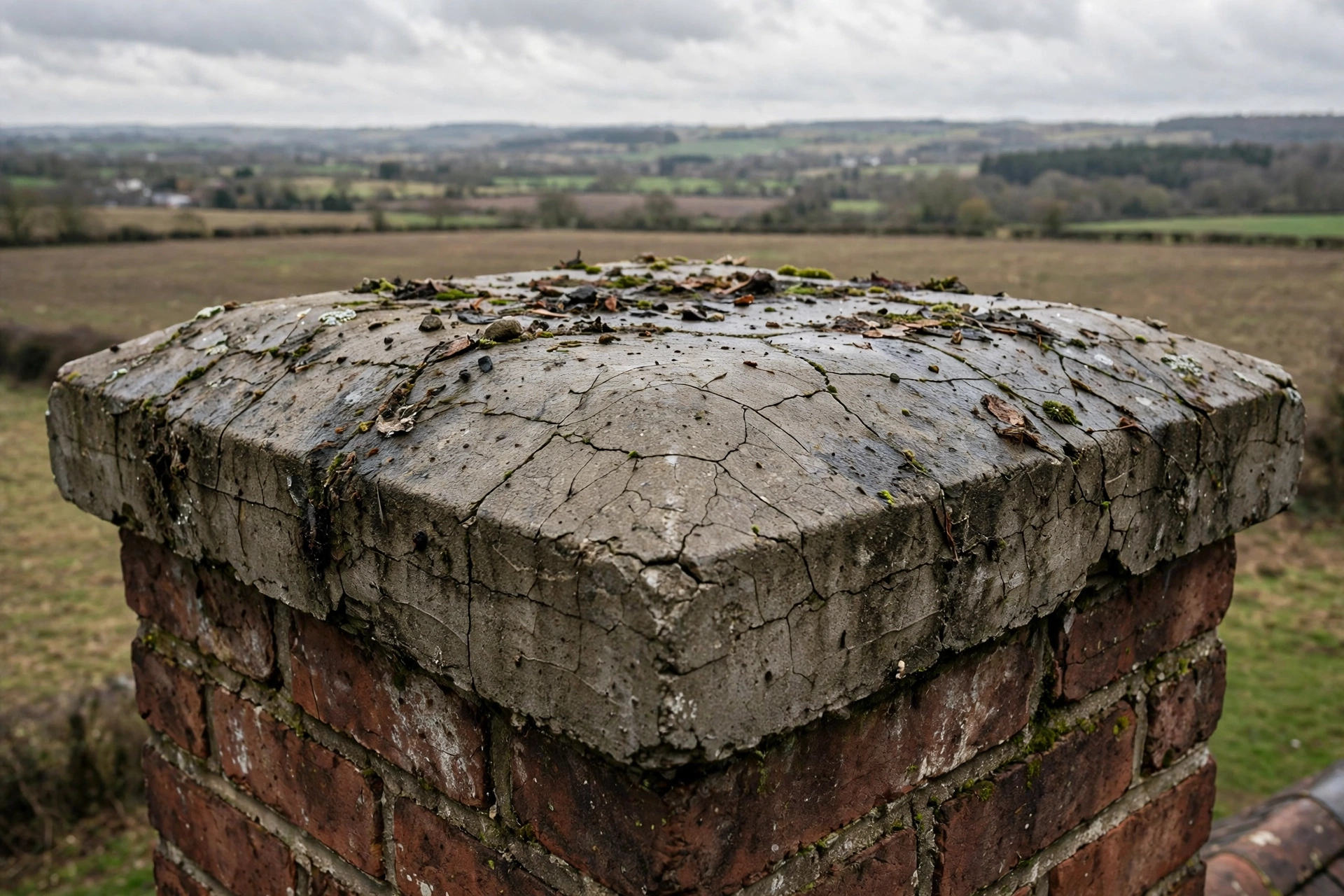
A hairline crack in the crown looks like nothing. Over one winter it becomes the reason the whole stack is saturated, and over several it becomes the reason the brick faces start failing.
The crown is the masonry slab across the top of the chimney, and its only job is shedding water. Here is what happens when it stops doing that job.
Heat from the flue, freeze-thaw, and plain age. Most crowns were built flat or with poor slope, so water ponds instead of running off, and ponding water finds every weakness. A crown that holds water is a crown that is cracking.
Every rain sends water down through the crack and into the brick below. The stack wets from the top down, which is why crown leaks often show up as dampness high on the chimney breast or stains near the ceiling.
Water in the crack freezes, expands, and wedges the crack wider. Each cycle makes the next rain’s entry easier. One cracked winter is a repair; five cracked winters is a rebuild of the top courses.
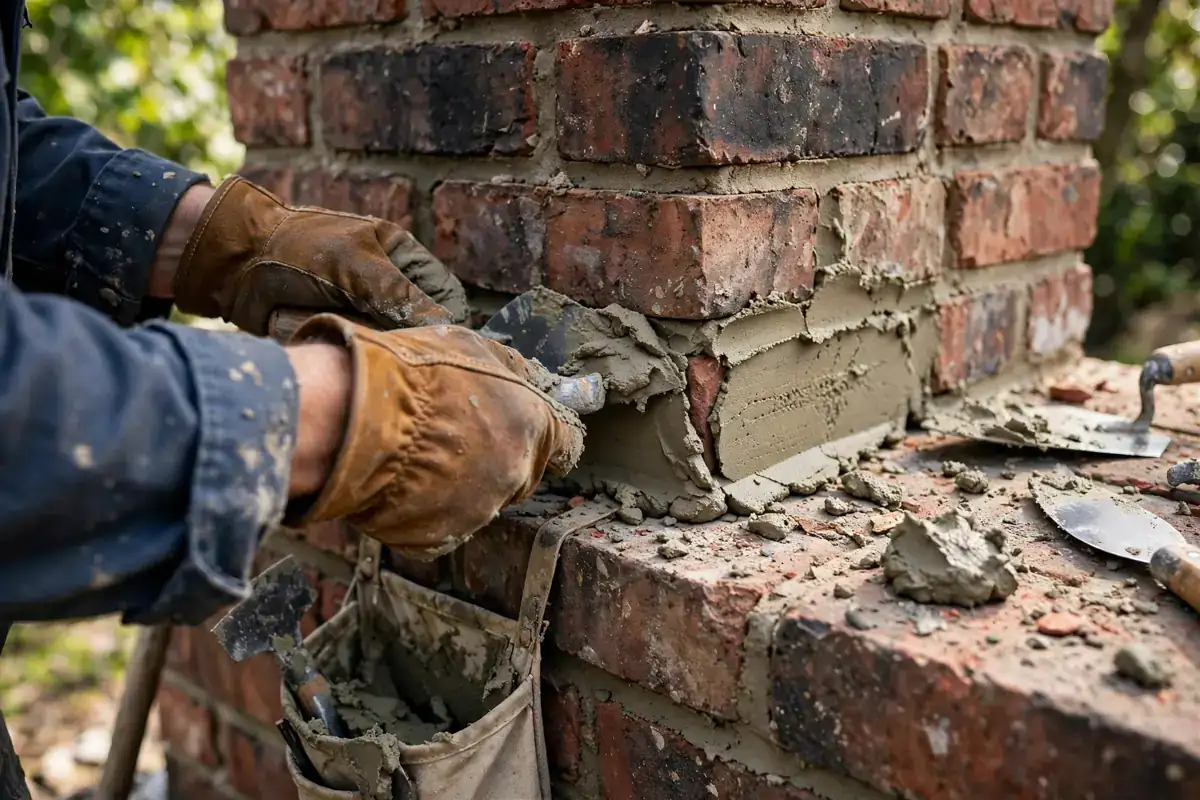
Smearing sealant over a cracked crown traps moisture in the masonry and fails within a season or two. A proper repair rebuilds the crown with the right mix, proper slope, and an overhang that drips clear of the brick.
You usually cannot see the crown from the ground, which is why it gets ignored. But dampness high on the stack, flaking brick near the top, or a stain that appears after every rain all point upward. An inspection with a ladder or a drone settles it fast.
If your leak symptoms point high on the chimney and the flashing looks sound, the crown is the next suspect. Call (857) 403-9943 and ask for the crown to be checked specifically; it is the most overlooked five minutes of a chimney inspection.
This site is protected by reCAPTCHA and the Google Privacy Policy and Terms of Service apply.